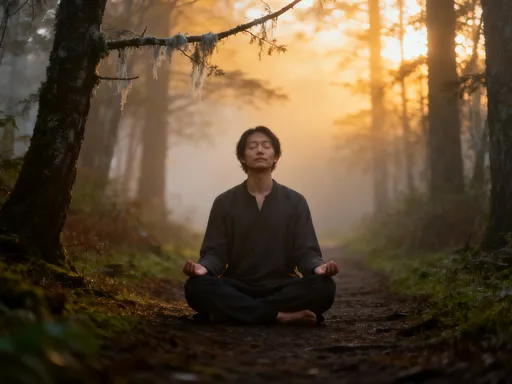
How I Calm My Mind Without Meditating — Simple Moves That Actually Work
Stress and mental clutter used to overwhelm me daily—until I discovered movement could quiet my mind better than sitting still. This isn’t about intense workouts or mastering yoga poses. It’s about small, intentional physical habits that reset your mood and clear your head. If you’ve ever felt too restless to meditate or too drained to “think positive,” these simple exercise techniques might be exactly what you need. Unlike traditional mindfulness practices that demand stillness and focus, these methods meet you where you are—mid-rush, mid-worry, mid-day. They don’t require special equipment, hours of time, or even a quiet room. Instead, they use the body’s natural ability to regulate the mind through rhythm, breath, and subtle shifts in posture. Over time, these gentle movements became my personal toolkit for emotional balance—accessible, repeatable, and deeply effective.
The Mental Wall I Couldn’t Climb
For years, I lived with a constant hum of anxiety—not the kind that sends you to the emergency room, but the low-grade, ever-present kind that makes mornings feel heavy and evenings restless. I’d wake up already tired, as if I’d spent the night running from something I couldn’t name. My thoughts circled the same worries: Did I do enough? Am I falling behind? What if something goes wrong? I tried every piece of advice the wellness world offered. I downloaded meditation apps and sat cross-legged on the floor, determined to “clear my mind.” But instead of calming down, I felt more agitated. My body twitched, my thoughts raced, and I ended up frustrated, convinced I was failing at relaxation.
I attempted journaling, writing down my feelings each night, but the pages filled with the same loops of concern. I tried digital detoxes, turning off screens by 8 p.m., only to lie in bed staring at the ceiling, my mind replaying the day’s small mistakes. I wasn’t depressed, not clinically—but I wasn’t at peace either. There was a wall between me and calm, and no amount of breathing exercises seemed to help me climb over it.
The turning point came unexpectedly. One evening, after a particularly tense day, I took my dog for a walk. I wasn’t thinking about mindfulness or stress relief—I just needed to get outside. As we moved down the sidewalk, something shifted. My shoulders dropped. My breath deepened. The tightness in my chest began to loosen. By the time we turned the corner, I realized I hadn’t thought about my worries for several minutes. It wasn’t that they were gone, but they no longer felt urgent. The rhythm of walking—my feet hitting the pavement, my arms swinging loosely—had somehow reset my nervous system. That simple, repetitive motion had done what meditation could not: it calmed my mind without demanding stillness.
From that moment, I began to notice other small movements that brought relief. Stretching while waiting for the kettle to boil. Shaking out my hands after typing for too long. Rocking gently on my heels while standing in line. These weren’t workouts. They weren’t even intentional practices at first. But they all shared one thing: they moved my body in ways that quieted my mind. I realized that for people like me—those who feel too restless to sit, too overwhelmed to focus—movement might not just complement mental wellness. It might be the missing piece.
Why Motion Soothes the Mind (Even Without Sweat)
At first, I assumed the calm I felt during walks was just a distraction—a way to shift my attention away from stress. But as I explored further, I learned there’s real science behind how gentle movement supports mental well-being. It’s not about burning calories or building strength. It’s about signaling safety to the nervous system. When we move in rhythmic, repetitive ways—walking, swaying, stretching—we activate the parasympathetic nervous system, the part of our body responsible for rest and recovery. This system lowers heart rate, reduces stress hormones like cortisol, and helps the brain transition out of “fight or flight” mode.
One key concept is **embodied cognition**—the idea that our thoughts and emotions are deeply influenced by our physical state. For example, research shows that simply sitting up straight can make you feel more confident, while slouching can increase feelings of helplessness. Similarly, the way we move affects how we think. When we walk at a steady pace, our brain synchronizes with the rhythm of our steps, creating a natural form of mindfulness. This is why many people find clarity while walking—it’s not just the fresh air, but the internal pacing that allows thoughts to settle.
Another powerful example is the way animals release stress. After a threatening encounter, a deer will often tremble briefly before resuming normal activity. This shaking is a natural mechanism to discharge excess nervous energy. Humans have the same capacity, though we often suppress it. When we allow ourselves to shake out our arms or legs—gently and without judgment—we mimic this biological reset. It’s not dramatic or intense; it’s a quiet way to let go of stored tension.
Even small motions, like rocking in a chair or tapping your foot, can have a regulatory effect. These movements stimulate the vestibular system, which is linked to balance and spatial awareness, and also plays a role in emotional regulation. This explains why rocking chairs feel soothing, or why children often seek movement when overstimulated. The body doesn’t need a gym or a yoga mat to find calm. It just needs permission to move in ways that feel natural.
The 3-Minute Reset: Shaking, Stretching, and Breathing Together
One of the most effective tools I’ve adopted is a simple three-minute routine I do every morning and whenever I feel tension building. It doesn’t require any preparation, and I can do it in my living room, at my desk, or even in a bathroom stall if needed. The sequence combines three elements: shaking, stretching, and breathing. Each part serves a specific purpose, and together, they create a fast, reliable way to reset my mental state.
First, I stand with my feet shoulder-width apart and begin to shake my arms loosely in front of me, letting them flap like wet noodles. I do this for about 30 seconds, allowing the tremors to travel up into my shoulders. Then, I shake each leg, lifting one foot slightly off the ground and letting the other vibrate gently. This may look odd, but it’s surprisingly effective. The light tremoring helps release muscular tension and signals to the brain that the body is safe. It’s a physical way of saying, “We don’t need to stay on high alert.”
Next, I move into slow stretching. I roll my neck in a gentle circle, first clockwise, then counterclockwise, taking care not to force any movement. I roll my shoulders backward and forward, feeling the space between my shoulder blades open slightly. Then, I interlace my fingers and stretch my arms overhead, reaching toward the ceiling. These movements increase blood flow to the neck and head, which can reduce mental fog and headaches caused by tension.
Throughout this sequence, I pair each motion with deep, slow breathing. I inhale for four counts, hold for a moment, and exhale for six. The longer exhale is key—it activates the vagus nerve, which helps calm the nervous system. I don’t try to control my thoughts during this time. Instead, I focus on the sensation of movement and breath. If my mind wanders, I gently bring it back to the feeling of my arms shaking or my breath filling my lungs.
The beauty of this routine is that it doesn’t demand perfection. Some days, I only manage one minute. Other days, I do it twice. But consistency matters more than intensity. Over time, my body began to recognize this sequence as a signal to relax. Now, even starting the first shake can trigger a sense of release. It’s not a cure for anxiety, but it’s a reliable tool I can use anytime, anywhere.
Walking With Purpose: Not Exercise, But Mental Maintenance
Walking has become my most trusted mental health practice—not because it’s strenuous, but because it’s rhythmic and grounding. Unlike meditation, which asks me to sit with my thoughts, walking gives my mind something to follow: the steady beat of my footsteps. I’ve learned to transform ordinary walks into moving mindfulness sessions by adding small layers of attention without pressure.
One technique I use is syncing my breath with my steps. I inhale for three steps, then exhale for three. If I’m feeling more agitated, I extend the exhale to four or five steps. This simple pattern creates a natural pacing that helps regulate my heart rate and quiet mental chatter. I don’t force it—if I lose count, I start again. The goal isn’t precision, but presence.
I also engage my senses deliberately. On each block, I notice one color I see, one sound I hear, and one smell in the air. It might be the red of a mailbox, the distant hum of a lawnmower, or the faint scent of rain on pavement. This sensory grounding pulls me out of rumination and into the present moment. It’s not about achieving deep insight, but about interrupting the cycle of worry.
What makes walking so effective for me is that it doesn’t require stillness. My mind, which rebels against sitting, can cooperate with motion. The act of moving forward—even slowly—creates a subtle sense of progress. I’m not stuck. I’m in motion. And that alone can shift my mood. Over time, I’ve come to see these walks not as exercise, but as mental maintenance—like brushing my teeth, but for my mind.
Desk-Friendly Moves That Fight Afternoon Slump and Anxiety
For those of us who spend hours at a desk, physical stillness can compound mental fatigue. By mid-afternoon, I often feel a double burden: physical stiffness and mental fog. To counter this, I’ve built a set of subtle, chair-based movements that I can do without drawing attention or leaving my workspace.
One of my favorites is the seated spinal twist. I sit tall, place my right hand on the back of my chair, and gently turn my torso to the right, looking over my shoulder. I hold for a few breaths, then switch sides. This small rotation releases tension in the lower back and improves circulation to the spine, which can enhance focus.
Another simple practice is foot circling. While seated, I lift one foot slightly and draw slow circles in the air with my toes—ten clockwise, ten counterclockwise—then switch feet. This movement stimulates blood flow from the lower body back to the heart and brain, reducing that heavy, sluggish feeling.
I also do shoulder blade squeezes: I pull my shoulder blades together as if trying to hold a pencil between them, hold for five seconds, then release. I repeat this five to ten times. This counteracts the forward hunch that comes from typing and helps open the chest, making breathing easier.
These micro-movements may seem too small to matter, but research shows that even minor physical activity can improve cognitive function and mood. Fidgeting, often seen as a distraction, is now understood as a natural coping mechanism. People who tap their feet, bounce their legs, or shift positions frequently may be unconsciously regulating their attention and energy. By embracing these small motions—rather than suppressing them—we can support our mental clarity throughout the day.
Building Your Own Routine: Start Small, Stay Steady
When I first began exploring movement as a tool for mental calm, I made the mistake of trying to do too much. I attempted ten different techniques in one week, hoping for a quick fix. Predictably, I burned out. What worked wasn’t variety, but consistency. I learned to pick just one or two practices that felt manageable and repeat them daily.
Now, I encourage others to start small. Choose one technique—perhaps the 3-minute reset or a five-minute walk after lunch—and commit to it for a week. It’s not about intensity or duration. It’s about showing up, even when you don’t feel like it. Progress isn’t measured in dramatic shifts, but in subtle improvements: falling asleep a little easier, feeling slightly less tense, noticing a moment of calm in an otherwise busy day.
To track these changes, I keep a simple mood log. Each evening, I rate my stress level from 1 to 10 and note any movement practices I did. Over time, patterns emerge. I’ve noticed that on days I walk or do the shaking routine, my average stress level is lower. I also sleep better and feel more patient with my family. These small wins build confidence and motivation.
It’s important to remember that movement is a support, not a cure. If anxiety or depression feels overwhelming, professional help is essential. Therapy, counseling, or medical treatment may be necessary. But for everyday mental maintenance, gentle physical practices can make a meaningful difference. The key is to avoid all-or-nothing thinking. Missing a day doesn’t mean failure. Starting again is what matters.
A New Way to Think About Mental Fitness
Through this journey, I’ve come to see mental wellness differently. I no longer view it as something to fix when broken, but as a system to maintain daily—like tending a garden. Just as plants need regular water and sunlight, our minds thrive on small, consistent acts of care. Movement, in its simplest forms, is one of those acts.
Healing isn’t always quiet. Sometimes, it moves. It shakes out tension. It walks through neighborhoods at dusk. It stretches in the kitchen while dinner simmers. These actions don’t erase life’s challenges, but they build resilience. They teach the body and mind that calm is possible, even in motion.
I encourage you to experiment. Try one of these techniques and observe what happens. Notice how your body feels afterward. Does your breathing deepen? Does your jaw unclench? These subtle shifts are signs of regulation. Over time, they accumulate into lasting change.
You don’t need to be flexible, athletic, or even particularly motivated. You just need to be willing to listen to your body and move in ways that feel good. Trust that even the smallest motion can carry great power. Because sometimes, the quietest peace comes not from sitting still—but from moving gently, intentionally, and with care.