How I Finally Got Flexible Without Pain — Real Moves That Work
Flexibility isn’t just for yogis or dancers — it’s a game-changer for everyday life. For years, I ignored it, only to feel stiff, sore, and out of sync. Then I started small: daily stretches, mindful movement, and consistency over intensity. Within weeks, I could touch my toes without wincing. This isn’t about extreme bends — it’s about real, usable flexibility that enhances health, prevents injury, and makes your body feel alive again. It’s the kind of mobility that lets you play with your kids, carry groceries without strain, or simply rise from a chair without groaning. And the best part? It’s never too late to begin. Science shows that with the right approach, anyone can improve their flexibility — gently, safely, and sustainably.
The Hidden Cost of Stiffness
Most people don’t think about flexibility until it’s gone. Yet, it’s a core component of physical function, just like strength or balance. When muscles and connective tissues lose their elasticity, the body pays a price. Common signs of poor flexibility include tight hips that make walking uncomfortable, a stiff lower back that flares up after sitting too long, or shoulders so tense they limit arm movement. These aren’t just minor inconveniences — they’re early warnings of a body under strain.
Modern lifestyles are largely to blame. Many adults spend hours each day seated — at desks, in cars, or on couches — which keeps muscles in a shortened state. Over time, this leads to adaptive shortening, especially in the hip flexors, hamstrings, and chest muscles. The result? A forward-leaning posture, reduced range of motion, and increased joint stress. Even simple tasks, like tying shoelaces or reaching for a high shelf, become awkward or painful.
Aging also contributes to stiffness, but it’s not the inevitable cause many assume. While natural changes in collagen and muscle mass occur with age, research from the Journal of Aging and Physical Activity shows that sedentary behavior accelerates these effects far more than chronological age. In other words, inactivity — not age — is the real culprit behind most stiffness. Women between 30 and 55, often juggling work, family, and household responsibilities, are especially vulnerable to neglecting their mobility until discomfort becomes hard to ignore.
Why Flexibility Matters More Than You Think
Beyond the ability to bend or stretch, flexibility plays a crucial role in overall health. It supports joint health by ensuring that muscles and tendons move smoothly across bones, reducing wear and tear. When muscles are supple, joints can move through their full range without excessive strain, lowering the risk of degenerative conditions like osteoarthritis. The American College of Sports Medicine emphasizes that maintaining joint mobility is essential for long-term musculoskeletal health, particularly as we age.
Good flexibility also improves posture. Tight chest muscles pull the shoulders forward, while stiff hip flexors tilt the pelvis, contributing to chronic back pain. By restoring balance to the muscular system, stretching helps align the spine and reduce postural strain. This doesn’t just make you look taller — it allows your lungs to expand more fully and reduces tension in the neck and shoulders.
Another often-overlooked benefit is improved circulation. When muscles are relaxed and pliable, blood flows more freely, delivering oxygen and nutrients to tissues while removing metabolic waste. This enhances recovery and reduces soreness after physical activity. Additionally, flexibility supports better balance and coordination. As the body gains control over its range of motion, movements become smoother and more precise, reducing the risk of falls — a critical concern for long-term independence.
Perhaps most surprisingly, flexibility can ease stress. Muscle tension and emotional stress are closely linked. When the body is tense, the nervous system remains in a state of low-grade alertness. Gentle stretching activates the parasympathetic nervous system, promoting relaxation. Studies have shown that regular stretching routines can lower cortisol levels, the hormone associated with stress, leading to improved mood and mental clarity.
Myths That Hold People Back
Despite its benefits, many people avoid stretching because of deeply ingrained myths. One of the most persistent is the belief that you’re too old to become flexible. This couldn’t be further from the truth. Research published in the Journal of Gerontology demonstrates that older adults who engage in regular stretching programs can significantly improve their range of motion, regardless of starting point. The body’s tissues remain responsive to movement throughout life. It may take longer to see changes, but progress is always possible.
Another harmful myth is that stretching should hurt — that “no pain, no gain” applies here. In reality, stretching should never cause sharp or intense pain. Discomfort may occur when muscles are tight, but pain is a signal that tissue is being damaged. The goal is gradual lengthening, not forceful overextension. Pushing too hard can lead to microtears, inflammation, or even muscle strain, setting back progress by weeks.
Some confuse flexibility with hypermobility — the ability to move joints beyond the normal range. While flexibility is healthy and functional, hypermobility can indicate joint instability and may increase injury risk if not supported by strength. The aim is not to become hypermobile, but to achieve balanced, controlled mobility that supports daily function.
Finally, many give up because they expect fast results. Flexibility is not a sprint; it’s a slow, steady process. Gains accumulate over weeks and months, not days. Comparing yourself to others or expecting overnight change leads to frustration. Instead, focus on how your body feels — a little less stiffness, a little more ease in movement — and celebrate those quiet victories.
The 3-Part Daily Routine That Changed My Mobility
The turning point came when I stopped treating flexibility as an occasional task and made it part of my daily rhythm. I adopted a simple three-part routine: dynamic warm-ups in the morning, static stretches in the evening, and mindful breathing throughout. This approach didn’t require special equipment or hours of time — just 10 to 15 minutes a day, done consistently.
In the morning, I begin with dynamic movements to wake up the body. These are gentle, flowing motions that increase blood flow and prepare muscles for the day. I start with cat-cow stretches on the floor, moving slowly between arching and rounding the back. This warms up the spine and eases tension in the lower back. Next, I do leg swings — holding onto a wall and gently swinging one leg forward and back, then side to side. This loosens the hip joints and activates the hamstrings and glutes. Finally, I roll my shoulders in slow circles, forward and backward, to release neck and upper back tension. Each movement lasts about 30 seconds per side.
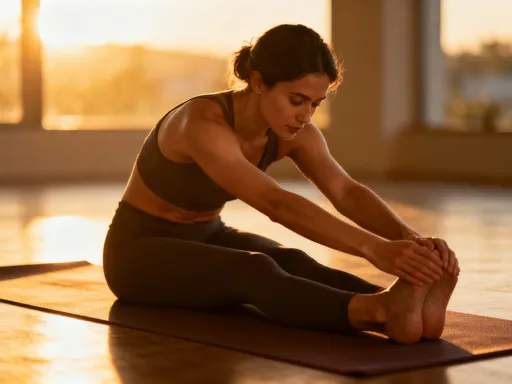
In the evening, I shift to static stretches — holding positions to lengthen muscles. I sit on the floor and perform a seated forward fold, reaching for my toes with a straight back. I don’t force it; I simply breathe and let gravity do the work. Then I move into the butterfly stretch, bringing the soles of my feet together and gently pressing my knees down. This opens the hips and inner thighs. Finally, I lie on my back and pull one knee across my body into a spinal twist, keeping both shoulders on the floor. I hold each stretch for 30 to 60 seconds, focusing on deep, steady breaths.
What made the difference wasn’t intensity — it was consistency. Doing a little every day built momentum. I noticed changes within two weeks: less stiffness when getting out of bed, easier movement when gardening or playing with my children. The key was showing up, even on days when I didn’t feel like it. Over time, these small efforts added up to real, lasting change.
When and How to Stretch for Real Results
Timing matters when it comes to stretching. Muscles respond best when they’re warm. That’s why stretching cold, stiff muscles first thing in the morning or before activity can be ineffective or even risky. Instead, it’s best to stretch after a light warm-up — a short walk, some marching in place, or gentle joint circles — or after a workout when blood flow is high.
For static stretches, the optimal duration is 30 to 60 seconds per muscle group. Research from the National Academy of Sports Medicine suggests that holding a stretch for at least 30 seconds allows the muscle’s sensory receptors to adapt, leading to a sustained lengthening effect. Repeating each stretch two to three times per session enhances the benefit. This isn’t about forcing the body deeper — it’s about giving it time to relax and release.
Bouncing during a stretch, known as ballistic stretching, should be avoided. This sudden, jerky motion can trigger the stretch reflex, causing muscles to contract instead of lengthen — the opposite of the desired effect. Instead, use static stretching: smooth, controlled movements held steadily. Move into each position slowly, stop at the point of mild tension, and breathe deeply.
Pairing stretching with breathwork amplifies the results. Deep, diaphragmatic breathing signals the nervous system to relax, which in turn allows muscles to let go. Try inhaling for four counts, then exhaling slowly for six or eight. With each exhale, gently ease a little deeper into the stretch — not by pushing, but by releasing. This mindful approach turns stretching into a calming ritual, not just a physical exercise.
Supporting Flexibility from the Inside Out
Stretching alone isn’t enough. True flexibility depends on what’s happening inside the body. Hydration is one of the most overlooked factors. Muscles are about 75% water, and dehydration makes them stiffer and more prone to cramping. Even mild dehydration can reduce muscle elasticity, making stretching less effective. Drinking enough water throughout the day — typically six to eight glasses, depending on activity level and climate — keeps tissues supple and responsive.
Nutrition also plays a role. Certain minerals are essential for muscle function. Magnesium helps regulate muscle contractions and prevent tightness; potassium supports fluid balance and nerve signaling. Foods like bananas, spinach, avocados, nuts, and sweet potatoes are rich in these nutrients. Additionally, chronic inflammation can contribute to stiffness. Eating a diet rich in anti-inflammatory foods — such as fatty fish, berries, leafy greens, and olive oil — supports overall tissue health.
Sleep is another critical factor. During deep sleep, the body repairs tissues, restores hormonal balance, and reduces inflammation. Poor sleep disrupts this process, leaving muscles tense and recovery slowed. Aim for seven to eight hours of quality sleep per night to support flexibility gains. Creating a bedtime routine — turning off screens, dimming lights, and practicing gentle stretches — can improve both sleep and mobility.
Conversely, habits like skipping meals, consuming excessive caffeine, or drinking too little water can sabotage progress. These behaviors create internal conditions that promote stiffness, making even the best stretching routine less effective. By supporting the body from within, you create the ideal environment for lasting flexibility.
Making It Stick: Habits That Build Long-Term Gains
The biggest challenge isn’t knowing what to do — it’s doing it consistently. The most effective stretching routine is the one you actually stick with. That’s why habit formation is key. One proven strategy is habit stacking — linking a new behavior to an existing one. For example, stretch for five minutes after brushing your teeth in the morning, or do a few seated stretches while watching the evening news. Over time, the cue (brushing teeth) triggers the action (stretching) automatically.
Tracking progress also helps maintain motivation. You don’t need a fitness tracker — simple benchmarks work just as well. Try the fingertip-to-floor test: stand with feet together and bend forward, noting how close your hands get to the floor. Re-test every few weeks. You may not touch your toes right away, but even small improvements — fingers reaching the shins instead of the knees — are signs of progress. Celebrate these milestones quietly, knowing each one reflects real change.
Reminders can also keep you on track. Set a daily alarm on your phone labeled “Move & Breathe” or use a habit-tracking app to log your sessions. The act of checking off a box reinforces commitment. If you miss a day, don’t criticize yourself — just return the next day. Consistency isn’t about perfection; it’s about persistence.
Finally, reframe flexibility as self-care, not a chore. It’s a daily gift to your body — a moment to slow down, reconnect, and honor what your body does for you every day. When viewed this way, stretching becomes less about achieving a goal and more about nurturing well-being. Over time, it transforms from something you have to do into something you want to do.
Flexibility isn’t a luxury — it’s a form of self-care that keeps your body functioning smoothly. By adopting simple, science-backed practices, anyone can improve their range of motion, reduce discomfort, and move with greater ease. It’s not about perfection, but progress. Start where you are, stay consistent, and let your body thank you. The ability to move freely is one of the greatest gifts you can give yourself — and it’s never too late to begin.