This Is Why Bruges Stole My Heart – Slow Travel Done Right
You know that feeling when a place just gets you? Bruges did that to me. Forget rushing through checklists—here, it’s about lingering over coffee by a quiet canal, stumbling upon a tiny bakery with the best waffles you’ve never heard of, and letting the cobblestone streets guide your days. Slow travel isn’t just a trend here; it’s the rhythm of life. And honestly? I didn’t expect to fall this hard. In a world that glorifies speed, Bruges quietly resists. There are no subway lines cutting beneath its medieval heart, no skyscrapers casting long shadows over its rooftops. Instead, time moves in gentle waves—measured by the clip-clop of horse hooves, the slow drift of swans along glassy canals, and the unhurried stir of chocolate in a copper pot. This is not a city to conquer, but to surrender to. And in doing so, something unexpected happens: you begin to remember what it feels like to simply be present.
The Magic of Slowing Down in Bruges
Bruges does not rush, and neither should you. From the moment you step into its compact center, the city sends a quiet signal: slow down. The narrow lanes, barely wide enough for a bicycle and a pedestrian to pass side by side, naturally discourage haste. There are no grand avenues designed for swift passage—only winding cobblestone paths that curl around corners like whispered secrets. Even the transportation reflects this pace. Horse-drawn carriages still roll through the Markt, their wheels echoing softly against the stone, offering a throwback to a time when travel was as much about the journey as the destination. This deliberate slowness is not an accident; it is woven into the city’s identity.
Psychologically, this shift away from urgency has profound effects. Modern travel often mimics the stress of daily life—packed itineraries, timed entry tickets, the constant pressure to see more, do more, post more. But Bruges invites a different rhythm. Studies in environmental psychology suggest that slower-paced environments reduce cortisol levels and improve mood. In Bruges, this plays out in subtle ways: the absence of loud traffic, the soft lapping of water against moss-covered walls, the way sunlight filters through centuries-old archways. These sensory details create a calming backdrop that allows visitors to decompress without even realizing it.
When schedules dissolve, leisure becomes the true itinerary. You might find yourself sitting on a bench for twenty minutes watching a fisherman cast his line into the Dijver Canal, or pausing to photograph the same gabled rooftop three times as the light changes. These moments are not distractions—they are the essence of the experience. There is no need to 'cover' Bruges in two days. In fact, attempting to do so would miss the point entirely. The city rewards patience. It reveals its beauty gradually, like a story unfolding over several quiet chapters. And in that unfolding, travelers often discover something unexpected: a renewed sense of presence, a deeper connection to their surroundings, and a quiet joy in simply being where they are.
Canalside Cafés: Where Time Stands Still
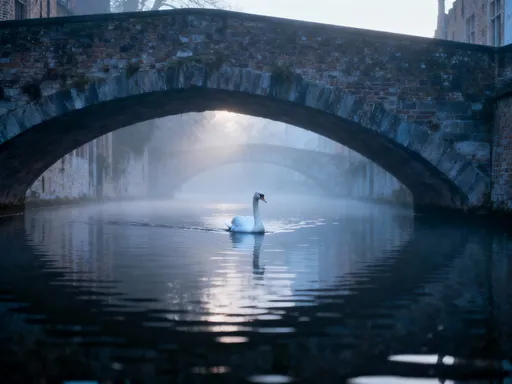
If Bruges has a heartbeat, it pulses gently along its canals. And nowhere is this rhythm more tangible than in its waterside cafés. These are not the bustling espresso bars of Italian cities or the trendy brunch spots of modern capitals. They are intimate, often family-run spaces where the pace matches the slow glide of houseboats drifting past. Sitting at a small iron table with a cup of rich Belgian hot chocolate, you may notice how time seems to soften. The world narrows to the steam rising from your drink, the reflection of a swan in the water, the distant chime of church bells carried on the breeze.
The café culture in Bruges is not about efficiency. No one rushes you to vacate a seat. Servers move with calm intention, offering warm smiles and unhurried service. Many of these cafés are tucked into 16th-century buildings, their wooden beams darkened by age, their windows framed by flower boxes spilling with geraniums. The seating is often limited, sometimes just a handful of tables perched right at the water’s edge. This scarcity is part of the charm—it ensures quiet, prevents overcrowding, and preserves the sense of intimacy.
For travelers seeking moments of stillness, these cafés are ideal. They provide the perfect setting for journaling, reading, or simply observing. There is a meditative quality to watching the canal life unfold: a couple gliding by in a paddleboat, a duck leading her ducklings beneath a stone bridge, the way the light shifts from gold to silver as afternoon turns to dusk. These small, unremarkable moments become meaningful when given space to breathe. And because most of these spots are off the main tourist trails, they remain relatively undiscovered by mass crowds. A morning visit, just after the shops open, offers the best chance to secure a prime seat and enjoy the city as it wakes—a soft, golden hour of peace before the day fully begins.
Hidden Courtyards and Secret Gardens
Behind the grand facades and bustling streets of Bruges lie hidden sanctuaries—courtyards and gardens tucked behind iron gates, accessible only to those who wander with curiosity. These green oases are not marked on most tourist maps, nor do they appear in glossy travel brochures. They are the city’s quiet secrets, passed down through local whispers and discovered by accident more often than by plan. Some are attached to centuries-old convents, their walls draped in ivy, their lawns dotted with ancient trees. Others belong to private homes, visible only through a half-open gate or a keyhole archway that invites a lingering glance.
The sensory experience of these spaces is deeply soothing. The air is cooler, scented with damp earth and blooming jasmine. Birdsong replaces the distant hum of traffic. The sound of footsteps on gravel or the rustle of leaves in the wind becomes the day’s soundtrack. These courtyards are not designed for performance or display—they exist simply to be. And in their stillness, they offer a rare gift: solitude in the heart of a historic city.
Finding them requires no special app or guidebook, only a willingness to stray from the main paths. Turn down a narrow alley behind the Church of Our Lady, and you might stumble upon a moss-covered courtyard where sunlight filters through a canopy of wisteria. Walk along the quiet residential streets of the Sint-Anna district, and you may glimpse a hidden garden through an open courtyard gate, its stone fountain trickling softly into a shallow basin. These discoveries are not guaranteed, but that is part of their magic. They reward slow, mindful walking—the kind of exploration that values surprise over certainty.
For travelers, especially those in the 30–55 age range seeking meaningful experiences, these spaces offer a chance to reconnect with stillness. They are ideal for quiet reflection, a moment of prayer, or simply sitting with a cup of tea and a good book. In a world that often equates travel with activity, Bruges reminds us that some of the most powerful experiences come from doing nothing at all—except being present in a place that feels like it has held its breath for centuries, just waiting to be noticed.
Chocolate Houses as Cultural Lounges
In Bruges, chocolate is not merely a treat—it is a tradition, a craft, and a form of hospitality. The city’s chocolate houses go far beyond retail. Many invite visitors to sit, linger, and participate in the ritual of tasting. Unlike the crowded souvenir shops near the Markt, these are intimate spaces where artisans work behind glass counters, tempering chocolate by hand, filling delicate pralines, and explaining the origins of their cocoa beans. Here, chocolate is not rushed. It is savored, discussed, and appreciated as both art and science.
The Belgian chocolate tasting experience is deliberate and sensory. A typical session might begin with a flight of three chocolates—milk, dark, and spiced—each paired with a small glass of water to cleanse the palate. The server will guide you through the process: first, observe the sheen and snap of the chocolate; then, inhale the aroma; finally, let it melt slowly on your tongue. This mindful approach transforms eating into an act of contemplation. It is slow travel in edible form—each piece a moment to pause, reflect, and enjoy.
For travelers, choosing the right chocolate house matters. The most authentic experiences are often found in family-run ateliers, where generations have passed down recipes and techniques. Look for shops that make their chocolates on-site, display certificates of origin for their cocoa, and offer tastings without pressure to buy. These are not transactional spaces—they are cultural lounges, where conversation flows as easily as hot chocolate. Some even host small workshops, allowing guests to try their hand at decorating truffles or molding figurines. These moments of hands-on engagement deepen the connection to the craft and leave lasting memories far beyond a simple purchase.
In a city where chocolate is everywhere, the true luxury is not the quantity, but the quality of the experience. It is not about collecting samples, but about understanding the care behind each piece. And in that understanding, travelers gain more than a sweet taste—they gain insight into a culture that values patience, precision, and pleasure in equal measure.
Leisurely Walks Through Historic Neighborhoods
One of the greatest joys of Bruges is the simple act of walking without destination. The historic neighborhoods of Sint-Anna, Assebroek, and Koolkerke offer some of the most authentic and peaceful experiences in the city. These areas lie just beyond the central tourist core, where the crowds thin and daily life unfolds in its natural rhythm. Here, you might see a woman hanging laundry between two gabled houses, the sheets fluttering like flags in the morning breeze. A baker might wheel a tray of fresh bread to his shop door, the scent of warm crust filling the narrow street. Children pedal past on bicycles twice their size, laughing as they wobble down the cobbles.
The architecture in these districts is just as captivating as in the center, but without the postcard-perfect polish. Red-tiled roofs tilt at gentle angles, their chimneys crowned with birds’ nests. Flower boxes burst with color, and wooden shutters are painted in soft blues and greens. The streets are quiet, lined with lime trees and occasional benches where locals sit with newspapers or knitting. There is a lived-in beauty here—a sense of continuity, of homes that have sheltered families for generations.
The best time to explore these neighborhoods is early morning or late afternoon, when the light is soft and the city is still. A walk at dawn reveals Bruges in its most intimate state: shopkeepers sweeping their doorsteps, cats stretching on sun-warmed stones, the occasional clip of a horse’s hoof in the distance. This is also the ideal time for photography, when the golden light catches the gables and reflections shimmer in the canals without the glare of midday sun or the clutter of tour groups.
Walking here is not about ticking off landmarks. It is about absorbing the atmosphere, noticing small details—the way a ivy vine climbs a brick wall, the chime of a church clock marking the hour, the sound of a violin practice drifting from an open window. These quiet moments accumulate, forming a deeper, more personal connection to the city. They remind us that travel is not only about seeing famous sites, but about feeling the pulse of a place through its ordinary, everyday life.
Museums That Invite Contemplation, Not Checklist Tourism
Bruges is home to several museums, but they are not the sprawling, overwhelming institutions of larger capitals. Instead, they are intimate, thoughtfully curated spaces that encourage deep engagement over rapid consumption. The Groeningemuseum, for example, houses an exceptional collection of Flemish Primitive paintings, including works by Jan van Eyck and Hans Memling. But its layout is not designed for speed. Rooms are small, lighting is soft, and benches are placed strategically to invite rest and reflection. Visitors are not rushed from one masterpiece to the next; they are encouraged to sit, observe, and let the details unfold.
This approach aligns perfectly with the principles of slow travel. Research in museum studies shows that most visitors spend less than 30 seconds in front of a work of art. In Bruges, the environment resists this habit. The absence of audio guides in many spaces, the lack of crowded viewing corridors, and the emphasis on quiet contemplation create a different kind of experience. You might find yourself standing before a 15th-century altarpiece for several minutes, noticing the intricate embroidery on a saint’s robe or the subtle play of light on a painted landscape. These moments of sustained attention are rare in modern life, yet deeply nourishing.
Other museums, like Choco-Story or the Frietmuseum, blend education with sensory engagement. They do not aim to overwhelm with information, but to tell a story—one that unfolds at a comfortable pace. In Choco-Story, for instance, visitors move through rooms that trace the history of chocolate, from ancient Mesoamerica to modern Belgium. Along the way, they can smell cocoa beans, watch demonstrations, and taste samples. The experience is immersive, but never frantic. It allows space for questions, conversation, and personal connection.
For travelers seeking meaningful cultural encounters, these museums offer a refreshing alternative to checklist tourism. They remind us that understanding does not come from seeing everything, but from seeing a few things well. And in a city that values depth over speed, they are not attractions to be conquered, but spaces to be entered with intention and presence.
Why Bruges Redefines the Idea of a “Must-See”
Bruges does not advertise itself as an adrenaline-filled destination. There are no roller coasters, no skydiving tours, no extreme adventures. Instead, it offers something far more radical in today’s world: the invitation to do less. In redefining what a “must-see” truly means, Bruges shifts the focus from quantity to quality, from action to awareness. A must-see is no longer a monument or a viewpoint, but a moment—a swan gliding past at sunset, a shared smile with a local shopkeeper, the taste of warm waffles dusted with powdered sugar.
This redefinition has lasting effects. Travelers who embrace slow travel in Bruges often report improved mood, reduced anxiety, and a renewed sense of wonder. The practice of moving slowly, observing deeply, and engaging mindfully does not end when the trip is over. It lingers, shaping how one approaches daily life back home. The habit of pausing, of noticing small beauties, of valuing presence over productivity—these become portable gifts.
Culturally, slow travel fosters deeper appreciation. When we take time to learn about a place—the origins of its chocolate, the history of its canals, the rhythm of its neighborhoods—we move beyond surface-level tourism. We begin to see the people, not just the sights. We understand that a city is not a collection of attractions, but a living, breathing community with its own pace and priorities.
So let Bruges surprise you. Let it challenge your assumptions about what travel should be. Walk without a map. Sit without a schedule. Sip chocolate as if you have all the time in the world—because here, you do. In the quiet hours, in the unhurried moments, you may find not just a beautiful city, but a renewed sense of yourself. That, more than any landmark, is the true destination.